1. Scientific context
The internship investigates the biological and physical role of leaf flutter. Some plant leaves oscillate in the wind, but the possible thermal benefits of this motion remain poorly understood.
Internship project: Aidan - Bio-Inspired Systems team, Institut des Sciences du Mouvement. Design of a mini wind tunnel and an experimental protocol to study the influence of flutter on leaf heat transfer.
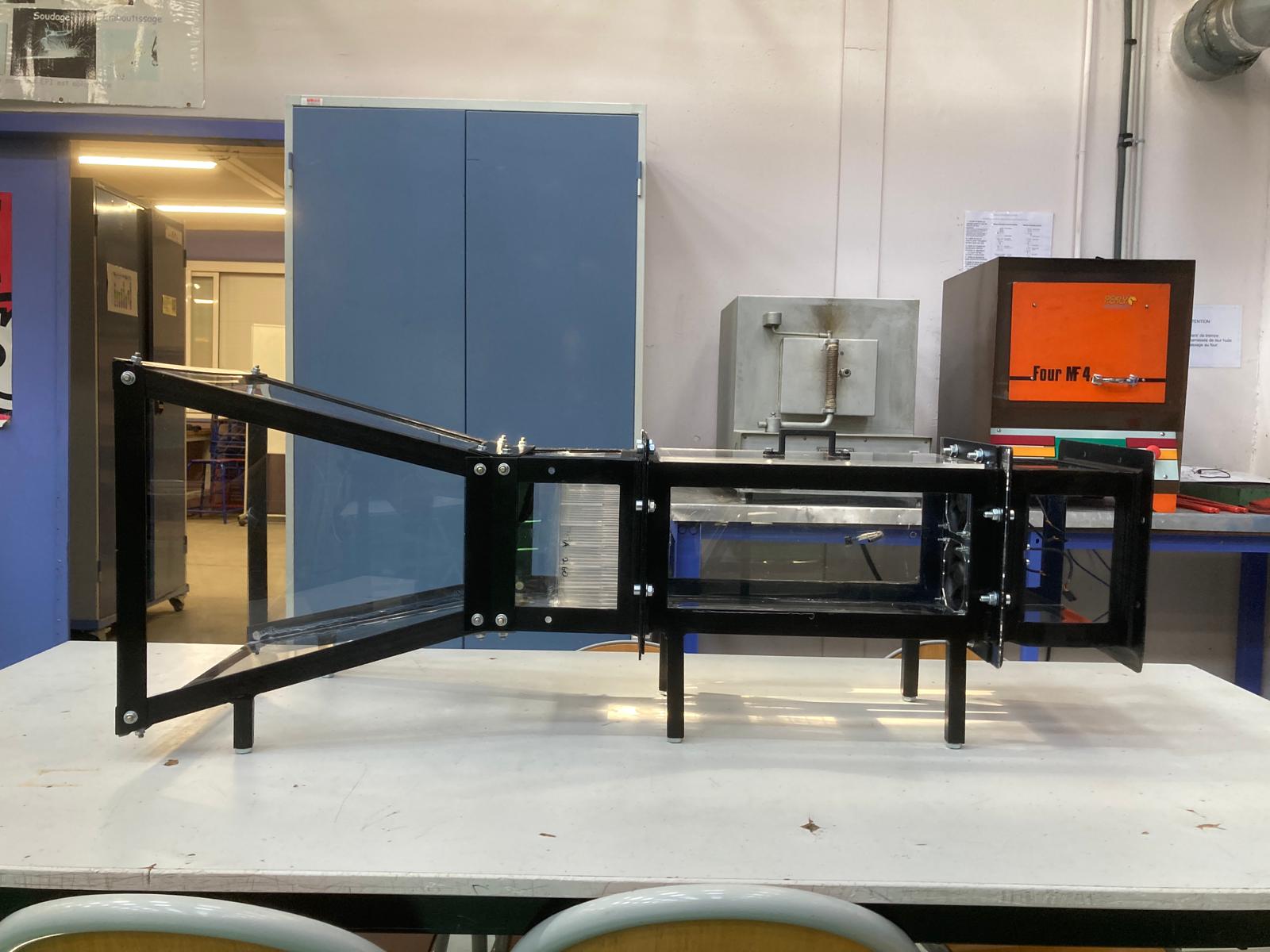
The internship investigates the biological and physical role of leaf flutter. Some plant leaves oscillate in the wind, but the possible thermal benefits of this motion remain poorly understood.
The work is organized around several axes: literature review, flutter onset criteria, the energy balance of a leaf, the design of a low-speed wind tunnel, aerodynamic characterization and the preparation of biomimetic leaf experiments.
Low-speed wind-tunnel prototype developed for table-top experiments. It imposes a controlled airflow around a leaf before thermal and aerodynamic measurements.
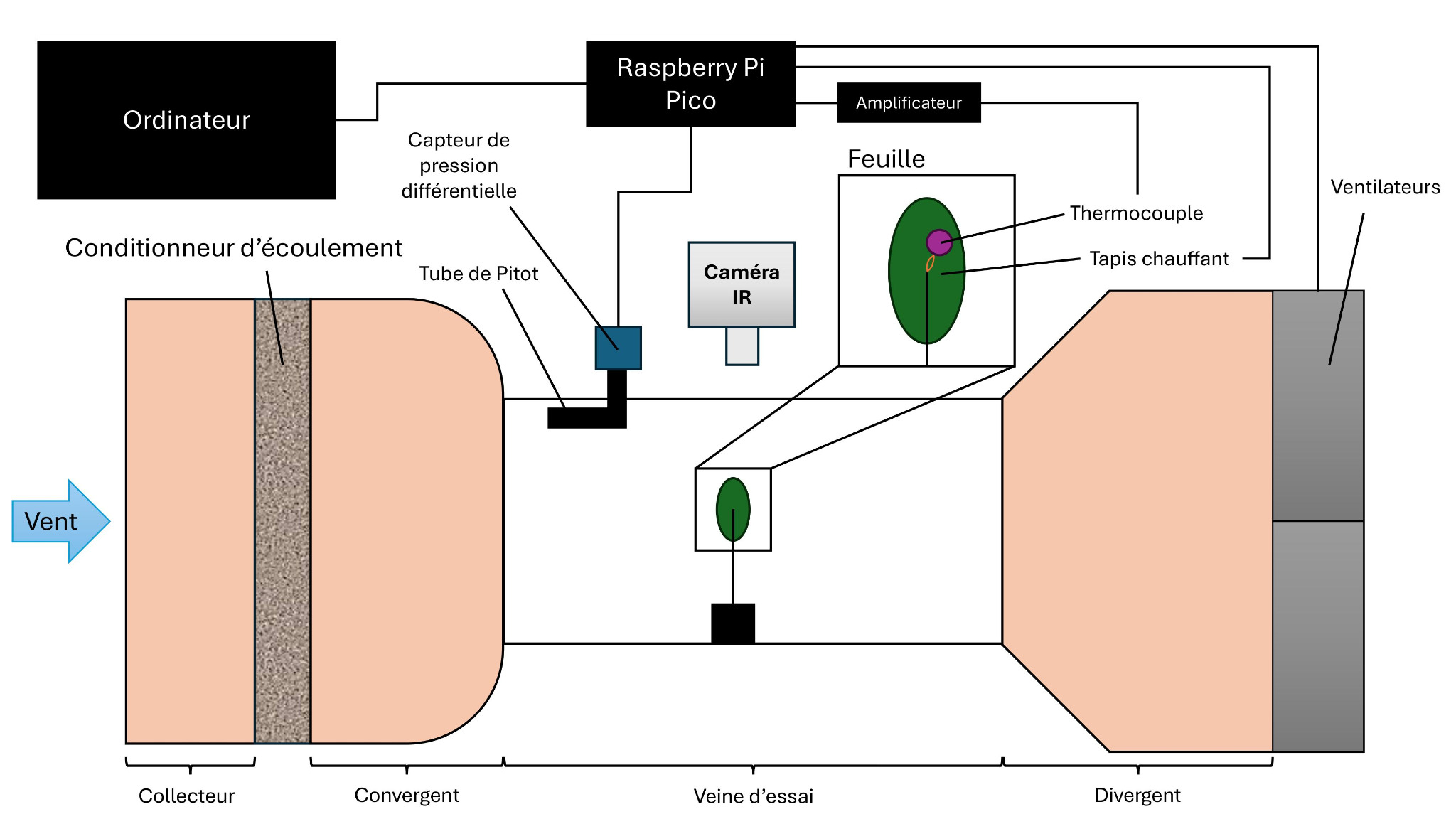
Principle diagram of the experimental setup with collector, convergent, test section, Pitot tube, differential pressure sensor, IR camera, thermocouple, heating mat and Raspberry Pi Pico.
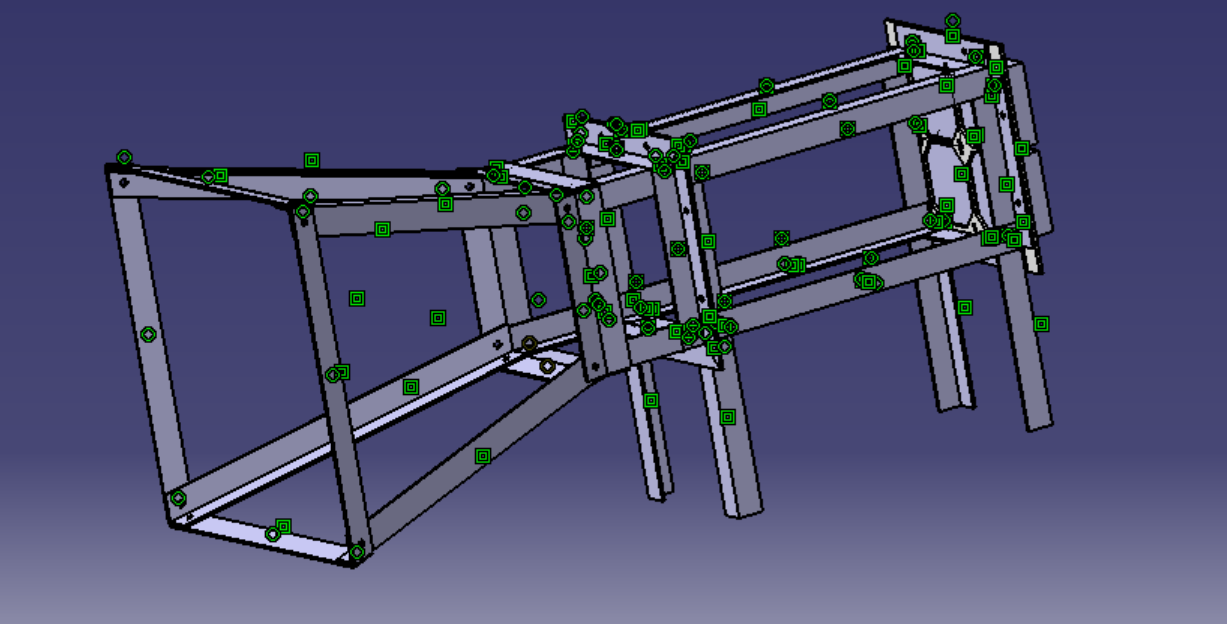
CAD model of the wind tunnel used to define the frame, airflow path and test section.
The wind tunnel is compact, horizontal and designed for low-speed table-top testing. It was built using nine reused computer fans and must be characterized before detailed tests on biomimetic leaves.
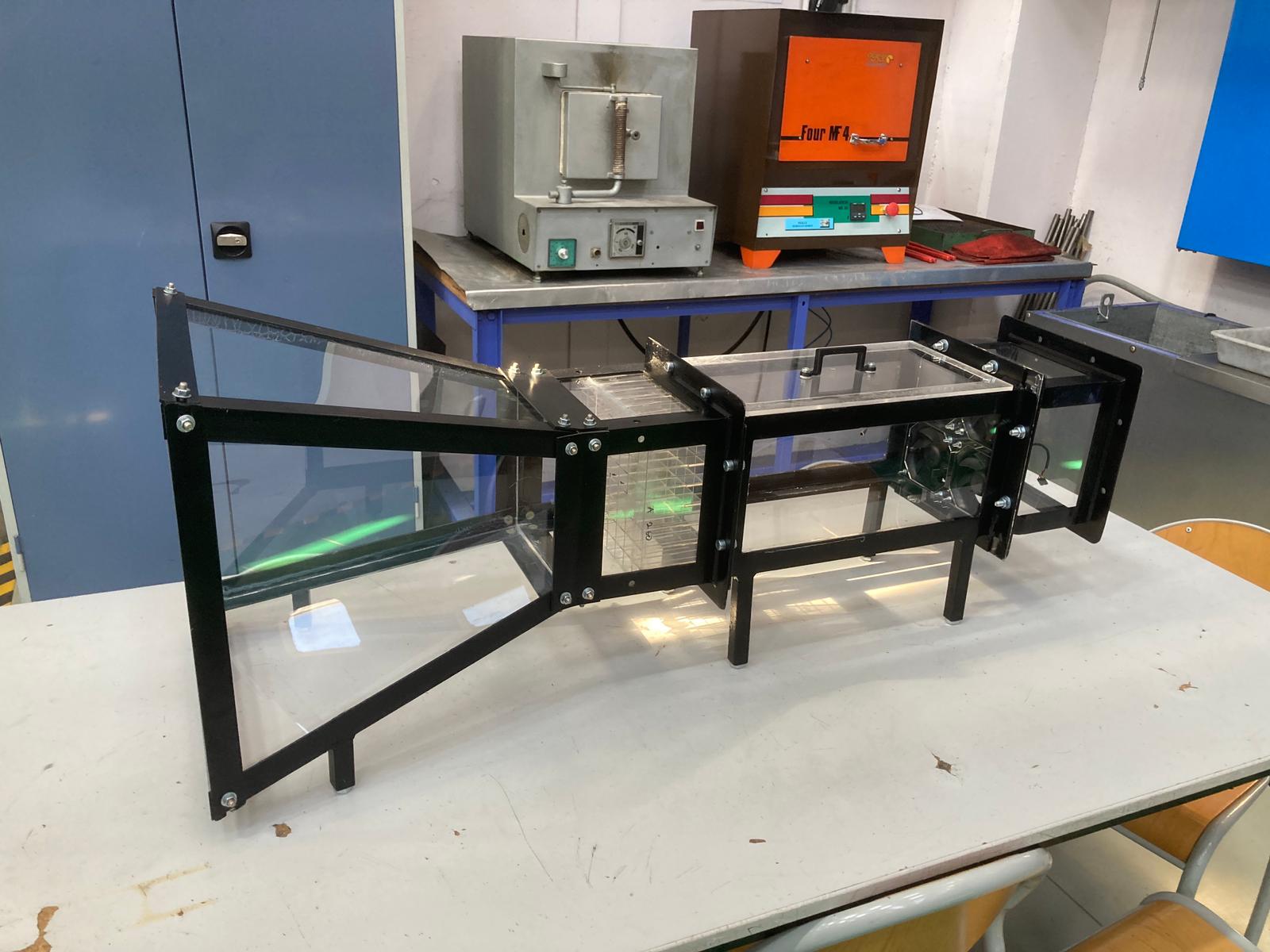
Additional view showing the convergent, test section and rear part of the wind tunnel.
After aerodynamic characterization, the system can be used to test biomimetic leaves and quantify how flutter influences convective heat transfer.
Use this button to open the print dialog, then choose “Save as PDF”.