Internship project: Afif - Bio-Inspired Systems team, Institut des Sciences du Mouvement. Design and fabrication of a flexible electroosmotic pump inspired by plant-cell turgor, using an Ecoflex chamber, propylene carbonate and a parametric CATIA mold.
Afif worked on a bio-inspired flexible electroosmotic pump designed to imitate plant-cell turgor. The project combines literature review, CATIA parametric mold design, silicone molding, layered electrode assembly and experimental validation of a first prototype.
1. Scientific context
This internship is part of the ANR MExP project led by the Bio-Inspired Systems team at the Institut des Sciences du Mouvement. The scientific idea is to reproduce plant turgor: in a plant cell, internal liquid pressure changes stiffness and shape. The project explores an artificial equivalent based on a flexible electroosmotic pump.
2. Principle of the electroosmotic pump
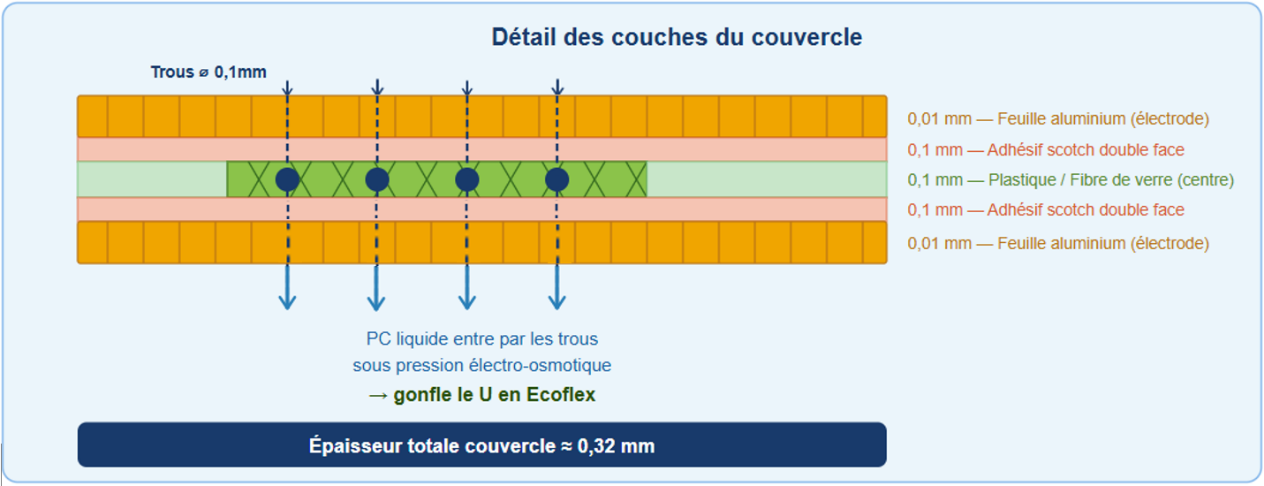
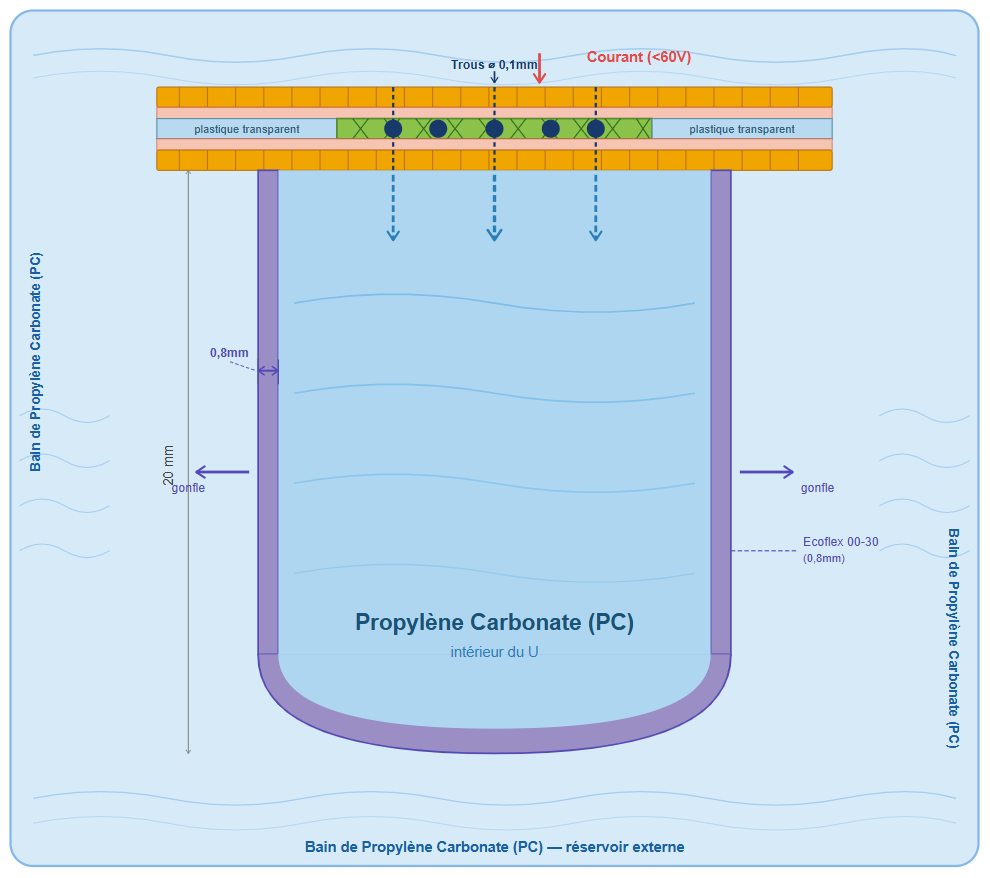
The device uses electroosmosis: when an electric field is applied across a porous material, mobile ions drag the surrounding liquid through the pores. In this project, propylene carbonate is used instead of water because it avoids gas bubble formation under voltage and offers useful dielectric properties. The liquid is pumped through a glass-fiber membrane into a soft Ecoflex chamber, causing the chamber to swell like a turgid plant cell.
Electroosmotic pumping principle
Layered principle of the pump: electrodes, adhesive layers, glass fiber and the soft output chamber work together to move liquid into the flexible cell.
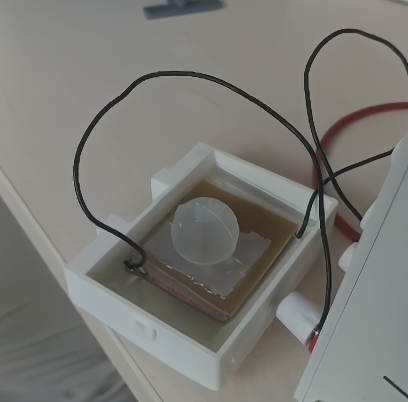
Soft chamber in propylene carbonate bath
The soft Ecoflex chamber is immersed in propylene carbonate. The bath acts as the liquid reservoir, which simplifies the architecture compared with more complex embedded reservoir systems.
3. Design choices and constraints
The ideal concept was a fully flexible pump using aluminum foils as electrodes, small 0.1 mm holes and a low operating voltage below 60 V. During prototyping, the aluminum foils could not be soldered reliably. They were replaced by copper-clad FR-4 plates, which solved the electrical connection problem but made the electrode part rigid. The active chamber remains flexible, but the device is therefore only partially flexible in its current state.
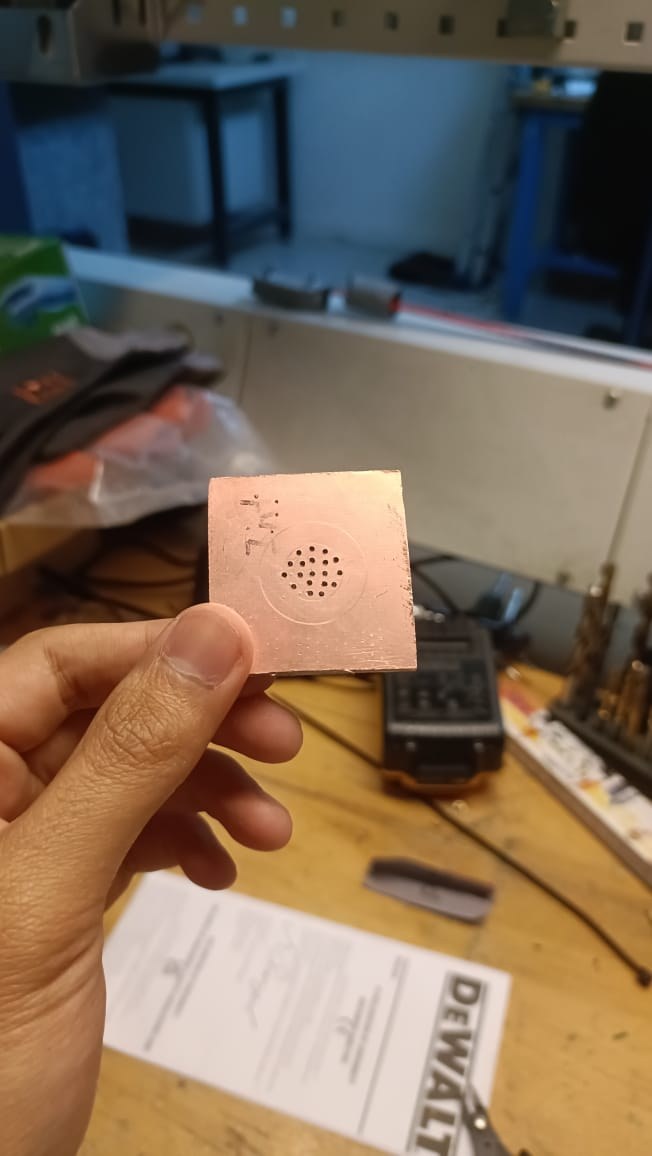
FR-4 copper electrode preparation
The final electrodes were made from copper-clad FR-4 plates. They are easier to solder than aluminum, but they reduce the overall flexibility of the prototype.
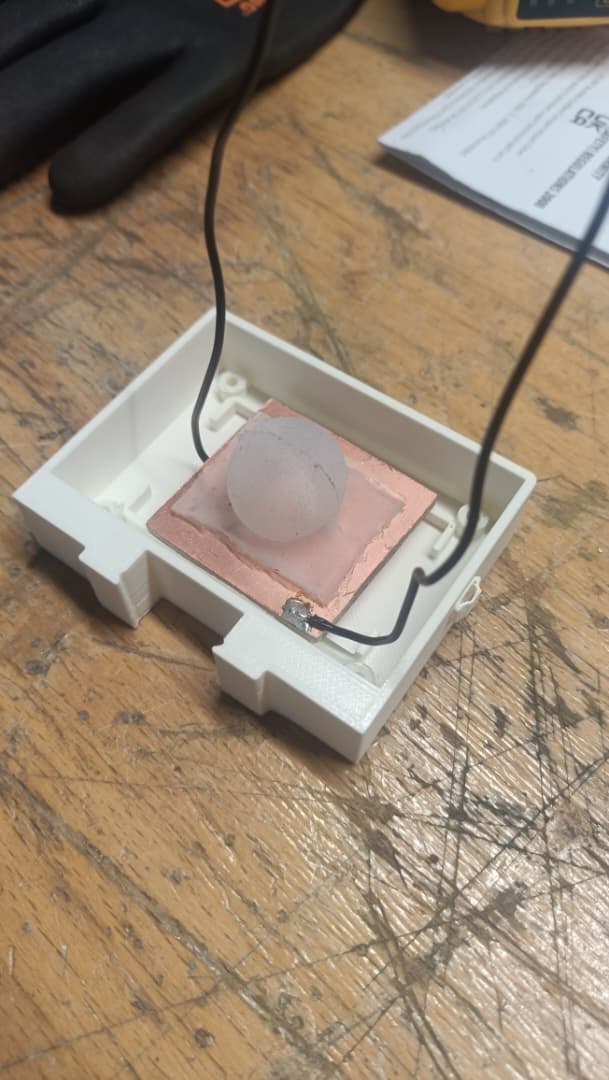
Layer assembly with copper electrodes
The FR-4 plates, adhesive layers, plastic separator and glass fiber are stacked to form the pumping layer. The copper side was finally oriented toward the glass fiber to reduce the electrode distance and increase the electric field.
4. Parametric CAD mold
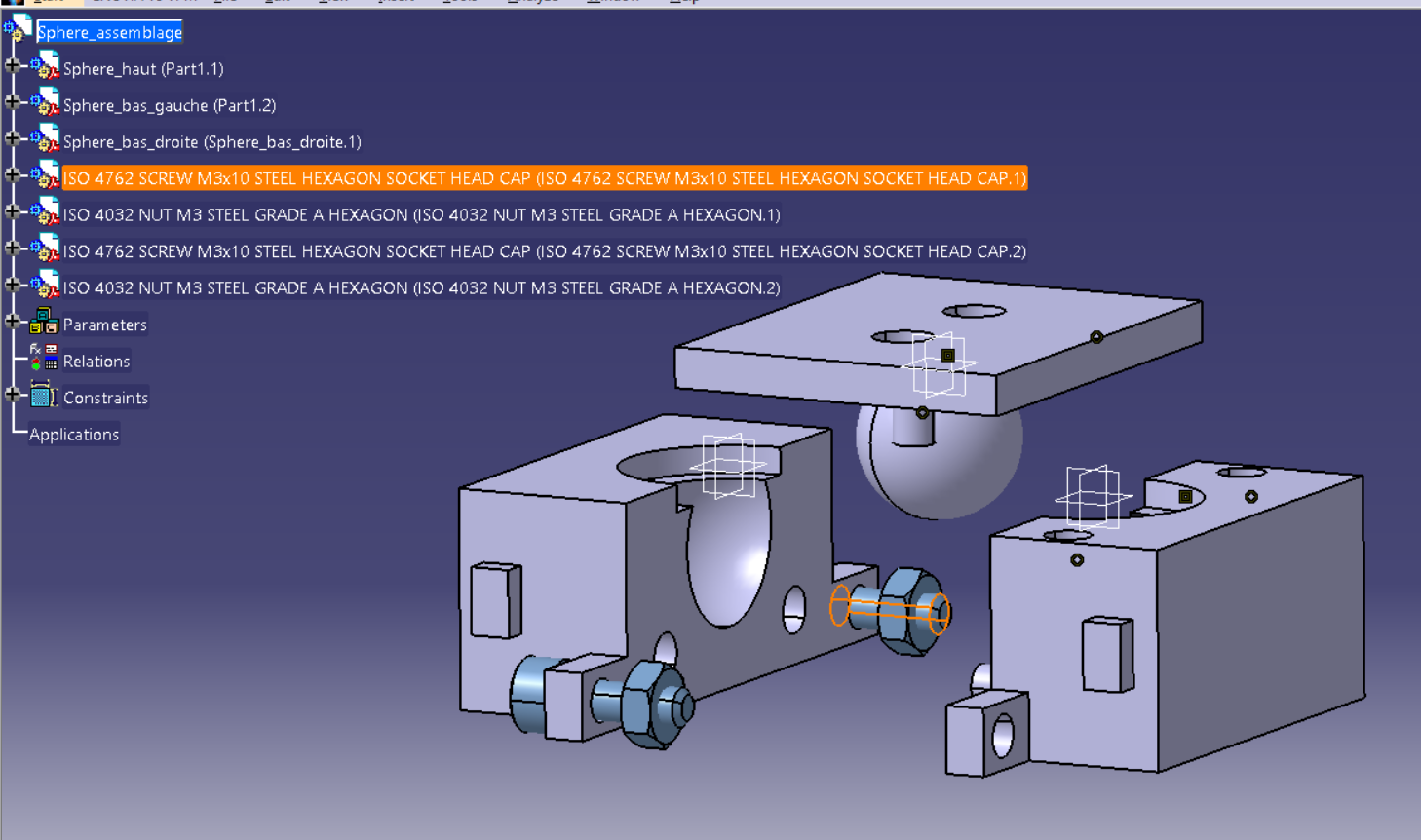
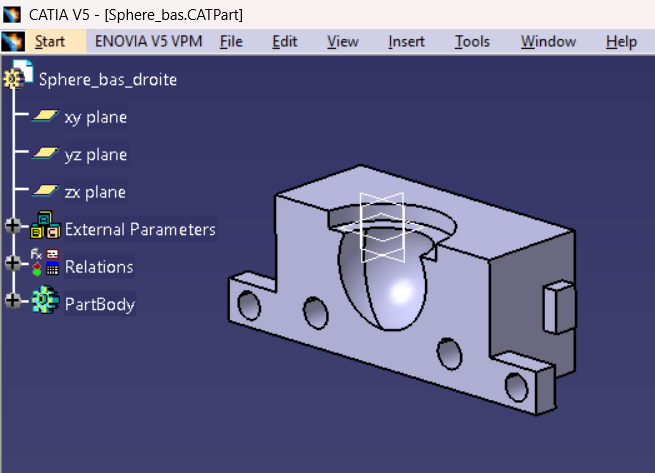
The Ecoflex chamber is produced with a parametric mold designed in CATIA V5. The mold includes a truncated spherical core and a split cavity. Two main parameters, radius and length, control the geometry, allowing the mold to be resized without rebuilding the entire model. This was important for moving from a first larger prototype to a smaller version.
CATIA parametric mold overview
Overview of the CATIA assembly used to generate the flexible chamber mold. The parametric model supports the transition from the V1 prototype to the miniaturized V2 version.
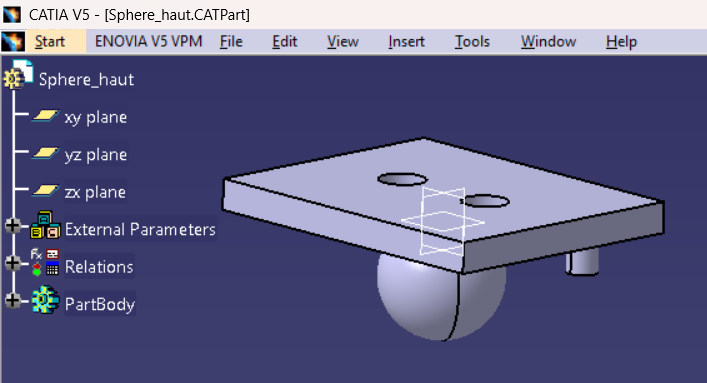
CATIA mold upper part
One of the mold parts used to form the flexible Ecoflex chamber.
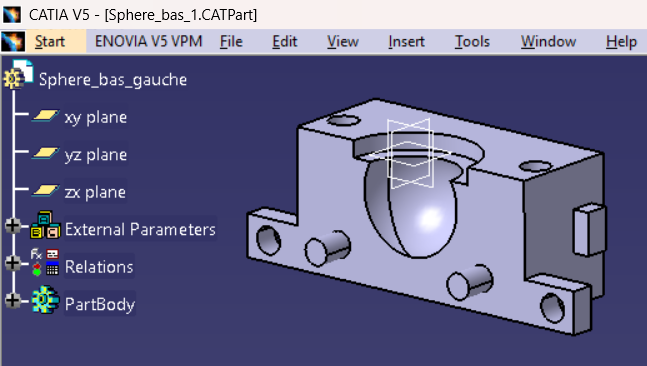
CATIA split cavity
The cavity is split to make demolding easier after the Ecoflex has cured.
Parametric mold view
The CAD model was configured so that the radius and length could be adjusted for miniaturization.
5. Mold versions
Two mold scales were produced. The first version used a 10 mm core radius, 8.75 mm length and a 1 mm shell thickness to validate the principle. The second version reduced the geometry to a 6 mm core radius, 5.25 mm length and a 0.5 mm shell thickness. This V2 is a miniaturization step toward a plant-cell-like scale, but it remains much larger than a real plant cell.
6. Silicone chamber fabrication
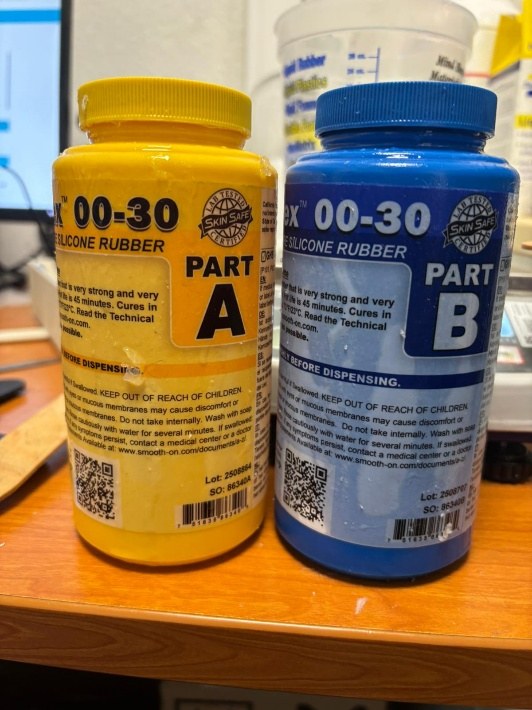
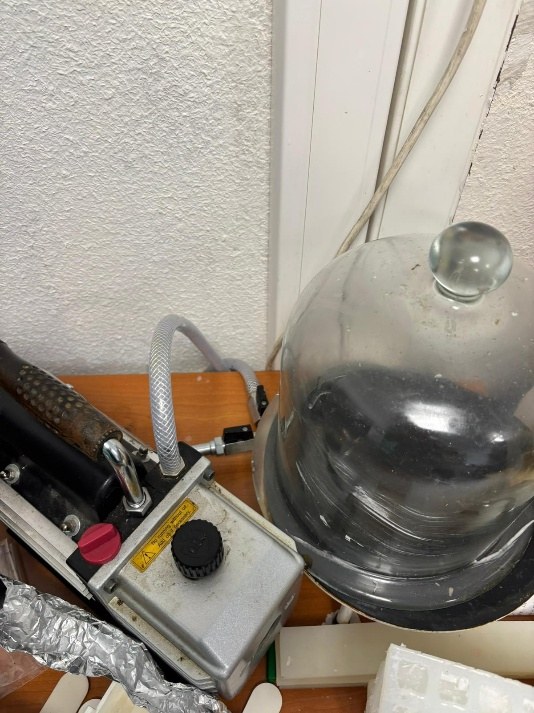
The chamber is molded with Ecoflex 00-30, mixed in a 1:1 ratio. The mixture is degassed under vacuum to remove air bubbles, poured into the closed mold and cured at room temperature. The result is a soft, thin chamber that forms the deformable part of the pump.
Ecoflex 00-30 components
Ecoflex 00-30 is used for the flexible chamber because it produces a soft silicone structure able to deform under internal pressure.
Ecoflex weighing
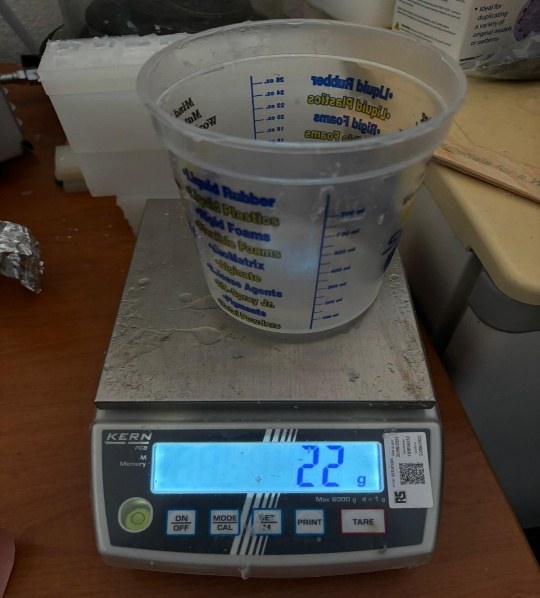
The two Ecoflex components were weighed to respect the 1:1 mixing ratio before molding.
Vacuum degassing
Degassing removes air bubbles before pouring the silicone into the mold, improving the quality of the chamber wall.
Molded chamber in the mold
The soft chamber is formed inside the 3D-printed mold before being removed and assembled with the pumping layers.
7. Prototype assembly and test
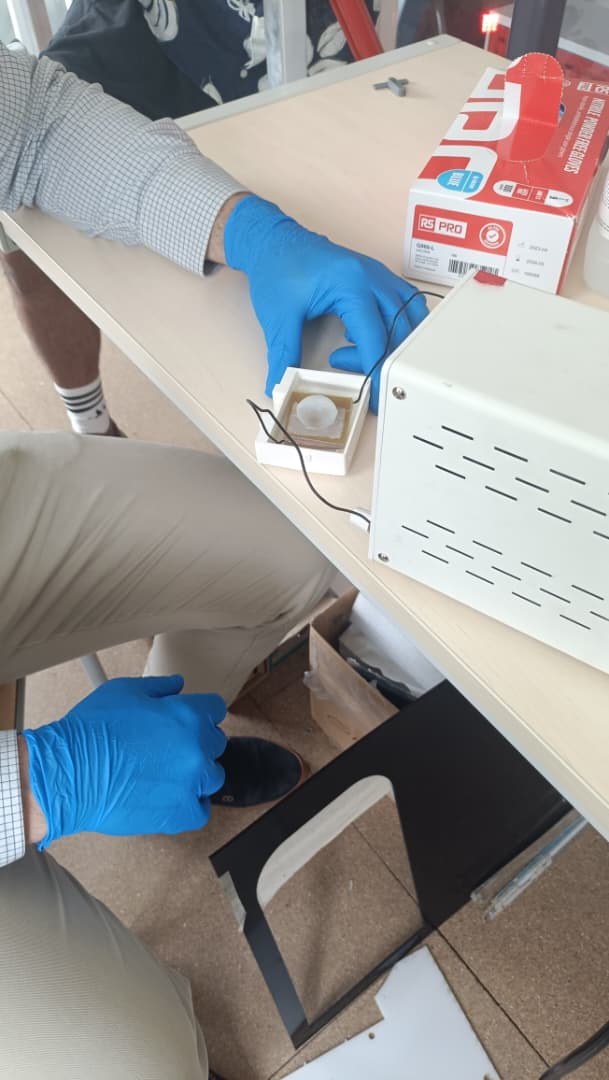
The V1 prototype was tested in propylene carbonate. After removing air from the chamber, voltage was increased until swelling was observed. The first successful test occurred at 120 V: propylene carbonate entered the Ecoflex chamber and the membrane visibly deformed. This validates the principle qualitatively, but it is still a single supervised test and should be repeated before full characterization.
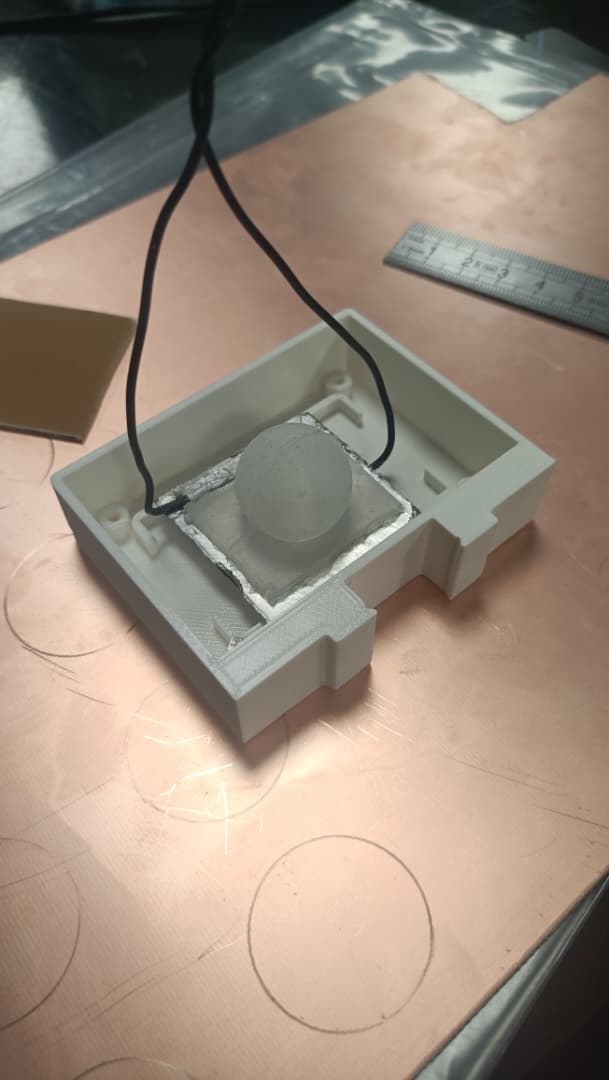
Prototype test assembly
Experimental test setup prepared for the first validation of the electroosmotic pump.
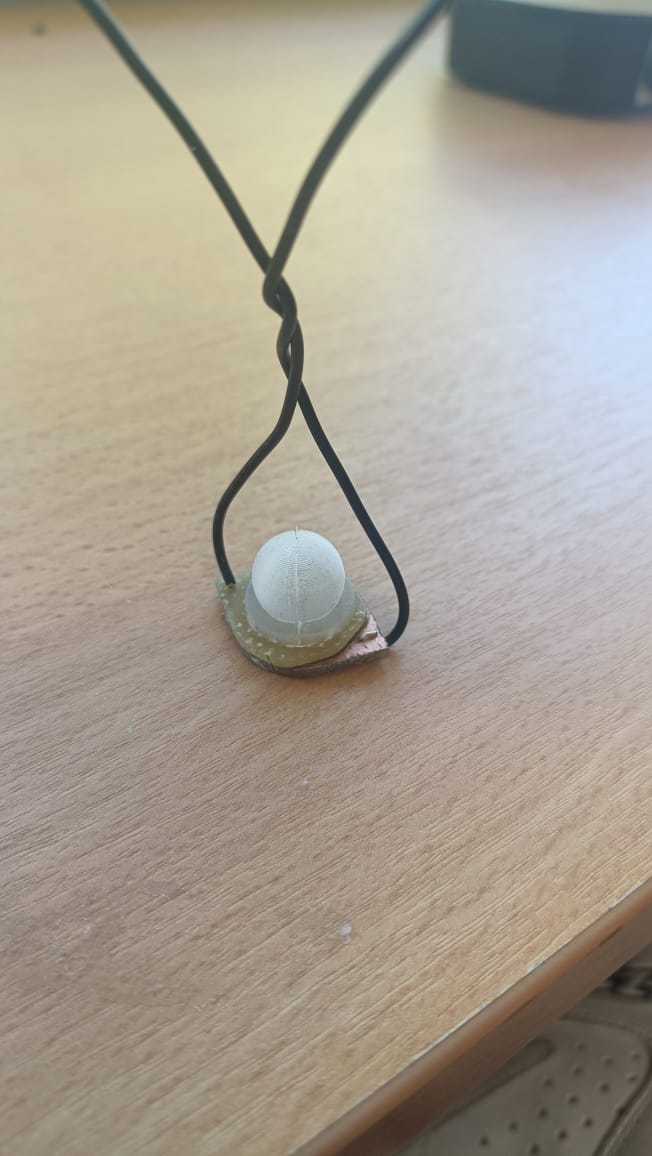
Assembled electroosmotic cell
Assembled flexible cell with electrode connections and the Ecoflex chamber visible on the upper side.
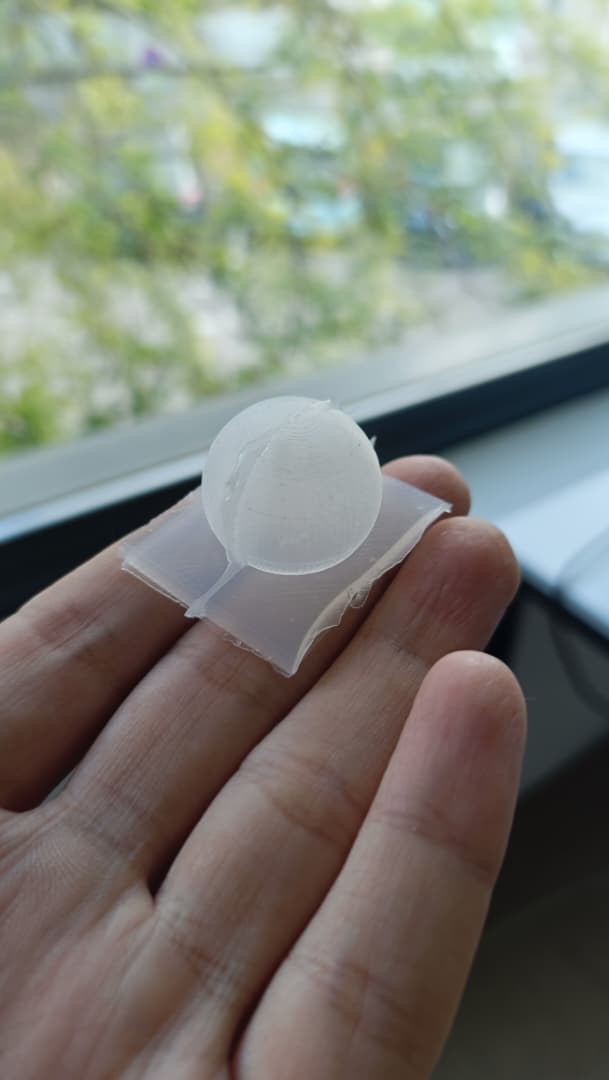
Miniature Ecoflex chamber
A smaller chamber was produced for the V2 miniaturized version of the device.
Prototype test video
Test video showing the behavior of the flexible chamber during operation.
8. Current results
The main result is the validation of the pumping principle on the V1 prototype at 120 V. The parametric mold also worked as intended and enabled a miniaturized V2 to be fabricated. However, the V2 was not tested during the internship, so the miniaturized behavior remains to be validated.
9. Limits and next steps
Three important limits remain: the device is not fully flexible because the aluminum electrodes had to be replaced by rigid FR-4 plates; the target low voltage below 60 V was not reached because the successful test required 120 V; and the miniaturized V2 still needs testing. A future step should also include quantitative characterization: displaced volume, internal pressure, current and repeatability.
10. CAD archive
The downloadable CAD archive contains the CATIA V5 files of the mold assembly used for the flexible chamber: the upper and lower mold parts, the truncated spherical core, the full assembly and the associated M3 screw and nut references. It is kept as a technical archive for reuse or future modification of the mold.
Download the CATIA mold archive
Downloadable archive containing the CATIA V5 mold files for Afif’s flexible electroosmotic pump project.